CanAm has financed multiple high-speed internet infrastructure projects across rural America, an EB-5 sector combining government grant support, rural set-aside priority processing, and measurable community impact.
Rural set-aside status means faster I-526E adjudication for eligible investors.
Federal and state programs (BEAD, CAF II, BOOT) co-finance projects alongside EB-5 capital.
Broadband deals generate 10-29+ qualifying jobs per investor, well above USCIS minimums.
Investors already in the U.S. on H-1B, L-1, and other visas may file I-485 simultaneously.
EB-5 rural broadband projects finance the construction of high-speed fiber and wireless internet infrastructure in areas designated as “rural” under the EB-5 Regional Center Program. Because proceeds are deployed in qualifying rural locations, these projects qualify for the rural set-aside category, which carries a lower minimum investment of $800,000, priority USCIS processing, and no per-country visa backlog for most nationalities. CanAm structures and sponsors the EB-5 loan on behalf of investors across its USCIS-designated regional centers.
1
Faster I-526E processing; no per-country backlog for most nationalities
2
$800,000 vs. $1,050,000 for non-rural projects
3
H-1B, L-1, J-1 holders may file I-485 at the same time as the I-526E
4
Federal and state grants reduce financing requirements across all deals
5
Corporate guarantees, asset liens, and real estate collateral on every project
6
CanAm has repaid $2.5B+ in EB-5 capital to more than 3,900 investors
Rural broadband projects deploy all EB-5 capital in areas officially designated as rural under the EB-5 Regional Center Program, which are, by definition, the unserved and underserved communities these projects are built to serve. That makes them eligible for the rural set-aside category created by the EB-5 Reform and Integrity Act of 2022. For investors, the set-aside carries three advantages. The minimum investment is $800,000, compared with $1,050,000 for non-rural projects. Both figures are set by statute and subject to scheduled inflation adjustments, with the next adjustment effective January 1, 2027. The set-aside also provides priority USCIS processing of the I-526E petition and access to reserved visa numbers that have not been subject to the per-country backlogs affecting other EB-5 categories.
In CanAm’s broadband projects the investment is structured as a loan, not an equity purchase. CanAm’s regional center pools investor capital and makes a senior or mezzanine loan to the project sponsor. Investors do not own a share of the broadband company and do not participate in its profits or losses beyond the return of principal at loan maturity. This structure is common in regional center EB-5 investments and gives investors a defined repayment obligation from the borrower, supported by the negotiated collateral package.
Repayment comes from the company’s operating resources at loan maturity: subscriber revenue from the completed network, government grant reimbursements received as milestones are met, and any refinancing the company undertakes. For grant-funded projects, award amounts are typically fixed once construction and service milestones are satisfied, regardless of final construction cost, which adds predictability to that portion of the repayment sources. The loan term for CanAm’s broadband projects is typically five years, often with extension options. As with any investment, repayment is not guaranteed, and investors should review the full risk factors in the offering documents and consult their own advisors.
CanAm negotiates a security package for each project that typically includes one or more of the following: first-priority liens on the project’s physical assets (equipment, infrastructure, fiber), a pledge of 100% of the equity in the borrowing entity, a corporate repayment guaranty from the sponsor, and in some projects additional real estate collateral held outside the project entity. The collateral structure differs by project, and the specific terms are described in each project’s offering documents, available to qualified investors through CanAm Investor Services.
Broadband grant awards often go to newer regional providers rather than large national carriers, which means CanAm is frequently the only institutional lender in the capital stack. That position shapes how each loan is built. With no senior lender ahead of it, CanAm engages independent construction monitors with broadband-specific experience to track work against both budget and grant-compliance requirements, and independent market consultants to test subscriber and revenue assumptions. Loans are also structured with cash sweeps into lender-controlled accounts and distribution restrictions that keep value inside the company until the loan is repaid.
Yes. Broadband infrastructure creates jobs through construction, installation, and ongoing operations, and because these are regional center projects, both direct and indirect jobs count toward the requirement of 10 qualifying jobs per investor. Each CanAm broadband project commissions an independent economic impact study to document projected job creation, and projects in the portfolio have consistently projected job creation well above the USCIS minimum. For example, the 360 Broadband project is projected to create more than 1,467 jobs, and the All Points Broadband Virginia project projected 17+ jobs per investor.
Concurrent filing lets eligible investors already in the United States submit the I-485 (adjustment of status) at the same time as the I-526E petition, rather than waiting for I-526E approval, which can shorten the time to a green card. Investors on H-1B, L-1, J-1, E, O, and certain other nonimmigrant statuses are typically eligible on rural set-aside projects. Concurrent filing requires an available visa number in the relevant category. Reserved rural set-aside numbers have generally remained current since the category was created, which has allowed many rural investors already in the U.S. to file concurrently. Availability can change, so current status and individual eligibility should be confirmed with an immigration attorney.
Rural broadband is high-speed internet delivered to communities in low-density areas that are unserved or underserved by major providers. Private companies have historically avoided these areas because the cost of building infrastructure, miles of fiber or wireless towers, is hard to recover from a small subscriber base. Reliable internet is now essential for jobs, education, healthcare, and economic participation. The federal government has designated closing the rural digital divide a national priority, committing over $65 billion through programs including the BEAD Program, a $42.45 billion initiative created by the Infrastructure Investment and Jobs Act, with a goal of universal high-speed access by 2030.
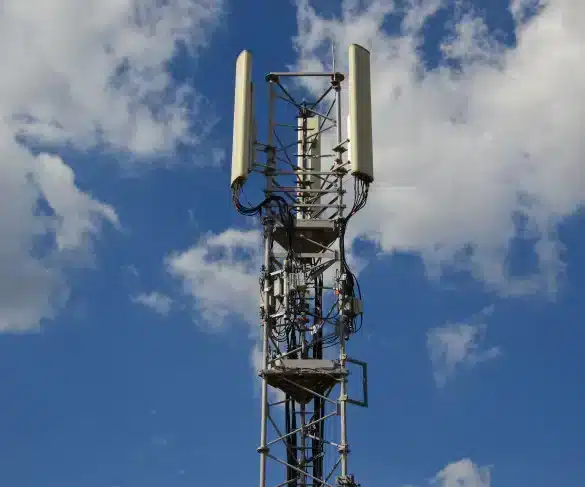
Your investment, structured as an EB-5 loan through CanAm, goes directly toward funding the physical construction of internet infrastructure. Depending on the project, this means laying fiber optic cable to homes and businesses, installing wireless towers and radio equipment, or building the supporting network infrastructure that connects rural communities to the broader internet.
Once construction is complete and the network is operational, the company generates revenue by charging subscribers for internet service. That ongoing revenue supports the company’s ability to repay the EB-5 loan at maturity.
The customers are households and businesses in rural areas with no reliable internet access, or access too slow for modern use. These are existing communities with documented connectivity gaps identified through federal broadband mapping, not hypothetical future demand. Demand is strong precisely because options are limited. Providers CanAm has partnered with, such as Wisper Internet and 360 Broadband, already serve thousands of active subscribers before the EB-5 project begins, which means the business model is proven rather than speculative.
Government grants like BEAD and the Texas BOOT program are significant but do not cover the full cost of construction, and they typically reimburse providers after milestones are met, so the provider needs upfront capital to begin building. EB-5 capital fills part of that gap, financing construction while grant reimbursements later contribute to repayment. Awarded grants are also a form of third-party validation, since grant programs require applicants to demonstrate technical and financial capability before funds are committed. For how BEAD funds are structured, see the NTIA BEAD FAQ.
The Bringing Online Opportunities to Texas (BOOT) program is a competitive state grant managed by the Texas Broadband Development Office. It funds expansion of high-speed internet in unserved and underserved rural areas, using milestone-based reimbursements as providers complete defined buildout targets. CanAm’s 360 Broadband project was awarded a $52.5 million BOOT II grant to serve 4,400 unserved and underserved locations in Fannin County, Texas. The EB-5 loan supports the construction needed to meet those grant obligations.
CanAm structures each project with completion guarantees and collateral packages to address this risk. Depending on the project, protections can include a corporate completion guaranty from the sponsor, first-priority liens on project assets and equipment, pledges of equity in the borrowing entity, and in some cases real estate collateral held separately from the project. The specific protections are detailed in each project’s offering documents. As regional center, CanAm underwrites and negotiates these terms on behalf of investors before a project is offered.
Want to know how CanAm can help with your EB-5 Visa process? Contact us to talk to a licensed investment expert today.


