Why a tighter capital market has renewed EB-5’s role as real development finance, and what careful, long-horizon execution looks like.
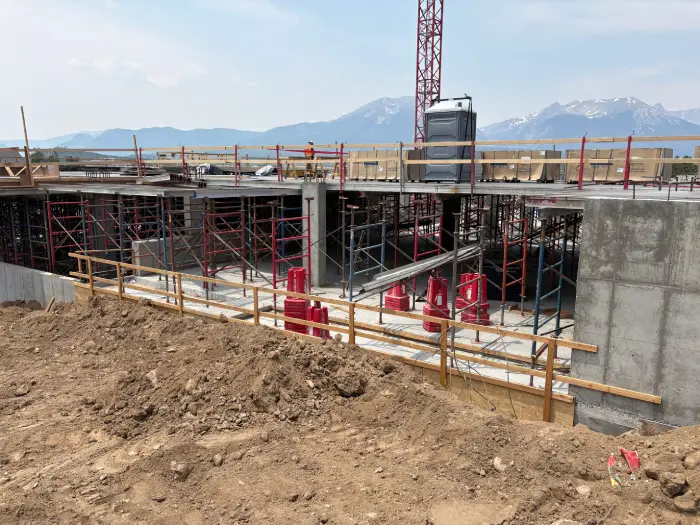
The capital markets today look a lot like they did in 2008 and 2009. Rates are high, sellers are holding out for prices that made sense three years ago, and buyers are waiting them out. Deals that ought to trade are sitting still, and many capable sponsors cannot raise what they need from the sources they normally rely on. Markets like this are when EB-5 does its most important work. When traditional financing retreats, that is when EB-5 becomes development finance, not just a cheaper line of capital.
What EB-5 does when it works
Set the immigration headlines aside and the function is simple. EB-5 brings foreign capital into projects that create American jobs, without spending a taxpayer dollar. That combination is hard to argue against, which is why the program has held support across party lines and through administrations that agreed on little else. Jobs for U.S. workers at no public cost is the reason EB-5 exists, and the reason its support has lasted.
One city, one clear example
Philadelphia shows what that looks like on the ground. In 2008, the expansion of the Pennsylvania Convention Center was half-built when the financing behind it collapsed. The cranes sat idle over an open site, and the tradespeople counting on that work stood to lose it. EB-5 capital, $122 million from a few hundred families investing from overseas, kept the project moving and the crews on the job. When the market recovered, those investors were repaid in full. Years later, Governor Ed Rendell said in the Philadelphia Inquirer that the expansion would not have happened without EB-5. That was his assessment, not CanAm’s. CanAm arranged the financing; the city and the people who showed up to build it did the rest.
That was the start of a longer partnership. More than a decade of projects followed around the Philadelphia Navy Yard, including work at the shipyard, where EB-5 financing helped bring skilled shipbuilding jobs, and the trained workforce that comes with them, back to a part of the city that had lost both. The same effort now runs through the redevelopment of a former refinery site, the Bellwether District, projected to add thousands of jobs in life sciences and advanced manufacturing. None of it cost taxpayers anything. One city, and the whole case for the program is visible in it.
How CanAm approaches it
None of that happens on its own. EB-5 only delivers that kind of result when the capital behind it is structured and underwritten carefully. Demand for EB-5 is enormous right now, and CanAm could raise far more than it does. It chooses not to. The firm would rather pass on a deal than attach its name to one it is unsure of. Increasingly that has meant moving beyond real estate toward sectors like broadband and infrastructure, where financing is hard to come by and the projects sit squarely within what the program was built to support.
CanAm structures its financings so that investor capital is protected before any distribution reaches a sponsor. With interest rates where they are, it has grown more conservative still, building in financial covenants and reserve accounts, and underwriting each project for where it stands today and where it is likely to be years from now. For the families who invest $800,000, that figure is no rounding error. It is a large share of what they have, and where it stands in five years matters more than anything closed this quarter.
No firm with a long history in EB-5 is untested by a hard market. The test is how it responds: staying in a difficult deal, keeping investors informed, and working the problem through. CanAm has operated that way across more than twenty years and several downturns, and that shows in the numbers investors weigh most, thousands of approved petitions and green cards secured for the families who invested.
A strong moment for the program
None of this argues for pulling back, only for being selective about which projects are worth doing. The program itself is in a strong position. The 2022 reforms steered capital toward rural and infrastructure projects and toward the job creation Congress intended, and the results are showing up in communities that had waited a long time for investment. Even the recent attention around a proposed gold card, whatever one makes of it, put EB-5 in front of the public and reminded people that a visa tied to job creation carries a credibility that flashier ideas do not. Heading into the 2027 reauthorization, the case for EB-5 is stronger than it has been in years.
Why it matters
CanAm was founded by an immigrant, and immigrants and the children of immigrants still fill its ranks. That shapes how the firm treats the families who hand over their savings and the future they are trying to build. An EB-5 investment is far more than a transaction for them, and it is treated that way. Done right, EB-5 is one of the most effective tools the country has for turning private capital into finished projects, working jobs, and new American lives. The measure of a firm in this business is not how much it raises in a strong quarter. It is whether the people who invested can count on where their money will be when it finally matters.
Learn More About CanAm | (212) 668-0690 | info@canamenterprises.com | www.canamenterprises.com