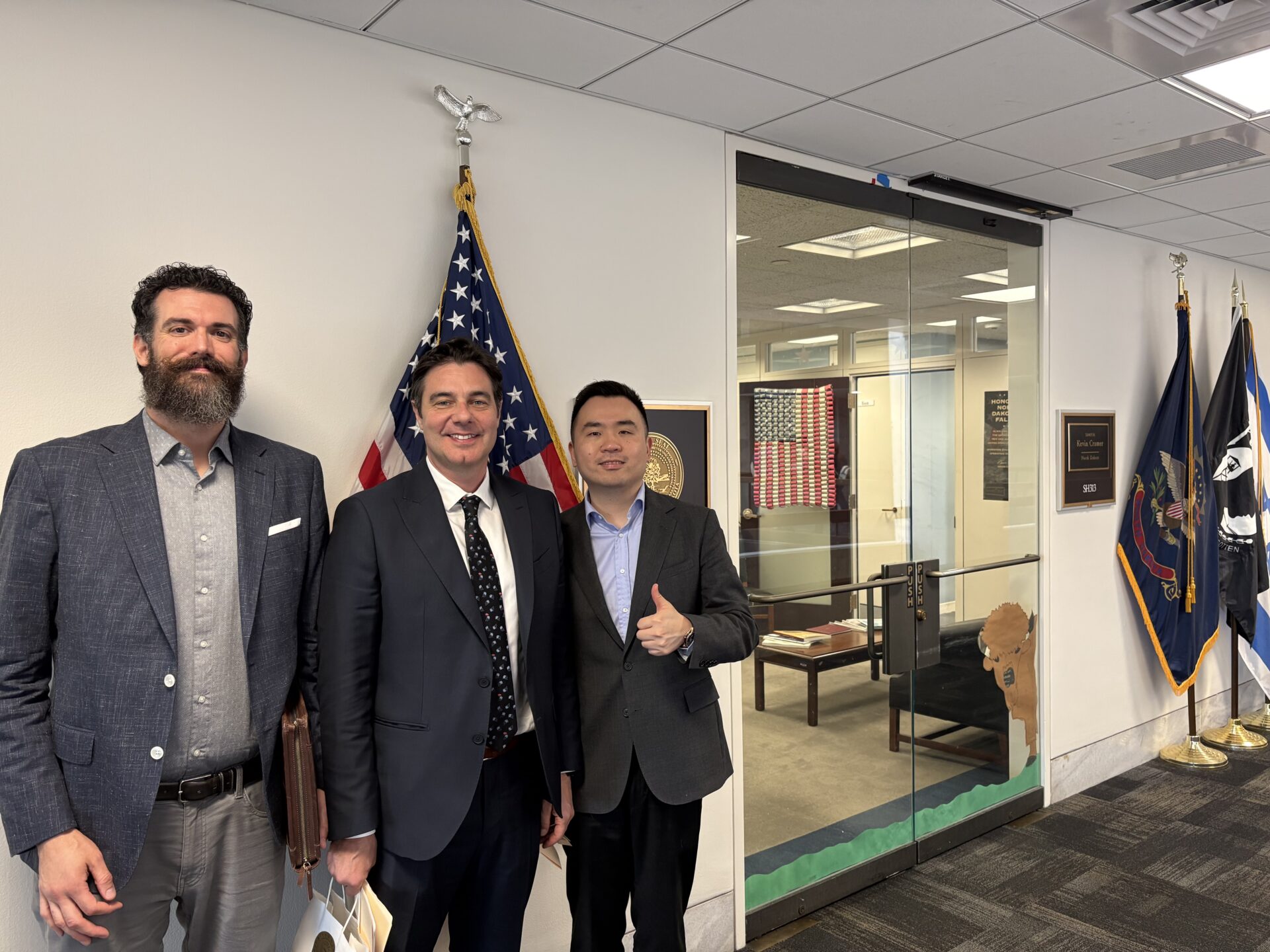
CanAm participated in this year’s IIUSA leadership summit and Capitol Hill fly-in, joining regional centers, immigration attorneys, and industry partners in Washington. The conversations kept returning to a question that reaches well beyond the EB-5 community: how private investment capital reaches the places that public programs alone have struggled to serve, and why continuity in the Regional Center Program matters for keeping that capital in motion.
A Program Opened to Rural Developers
The EB-5 Reform and Integrity Act of 2022 changed who could realistically use the program. By setting aside a share of visas for rural projects and granting them priority processing, the RIA made EB-5 a practical financing option for rural developers and infrastructure sponsors that had rarely engaged with it before. Much of EB-5’s activity had historically concentrated in dense urban real estate. The reserved rural pathway pointed the same capital toward communities sitting far outside those markets.
Four Years of Building Familiarity
A reserved pathway on paper does not finance a single mile of fiber. What followed the RIA was slower and less visible: introducing EB-5 to sectors that did not know how it functioned, explaining how the capital behaves, and earning the confidence of developers weighing it against conventional financing. CanAm invested in rural broadband through this period, making the sector a deliberate focus and directing EB-5 capital toward projects extending high-speed internet into underserved areas. Groundwork of this kind takes years before it shows results.
The Groundwork Is Paying Off
Those results are now on the record. CanAm has structured, raised, and administered financing for six closed rural broadband projects, channeling $385.6 million in private EB-5 capital alongside more than $1.3 billion in public broadband funding awarded to these sponsors and the programs supporting them. Together these projects are helping connect roughly 200,000 homes and businesses in six states, from Virginia and Texas to New Hampshire, Vermont, Maine, and Illinois. Independent economic impact studies project more than 9,200 jobs. These are solidly Republican and solidly Democratic districts alike, financed through the same model, because connectivity does not divide along party lines.

A Moment That Should Not Be Interrupted
The awareness built over four years now exists, developers understand the option, and a pipeline of rural projects is active. Allowing the Regional Center Program to lapse would strand that momentum just as it begins to compound. Industry leaders at the summit described EB-5 as a capital market, one whose value depends on predictability, and disruption interrupts the flow of job-creating investment that rural communities are only beginning to reach.
Timing matters too. The federal government is making a major commitment of its own to rural connectivity through BEAD and related programs, and EB-5 is well positioned to work with that public funding rather than against it. Industry practitioners anticipate that reauthorization would preserve this complementary role when it counts most.
An Industry United
In Washington, the tone was confident and forward-looking. Across regional centers, counsel, and sponsors, the industry shares a clear view of what the program makes possible and why its continuity matters for the communities it now reaches. Four years in, the developers, families, and rural districts on the other end of this capital are proof the model works. CanAm remains committed to that work, and to seeing it through.