EB-5 Retrogression and the Visa Bulletin: What Indian Investors Should Expect
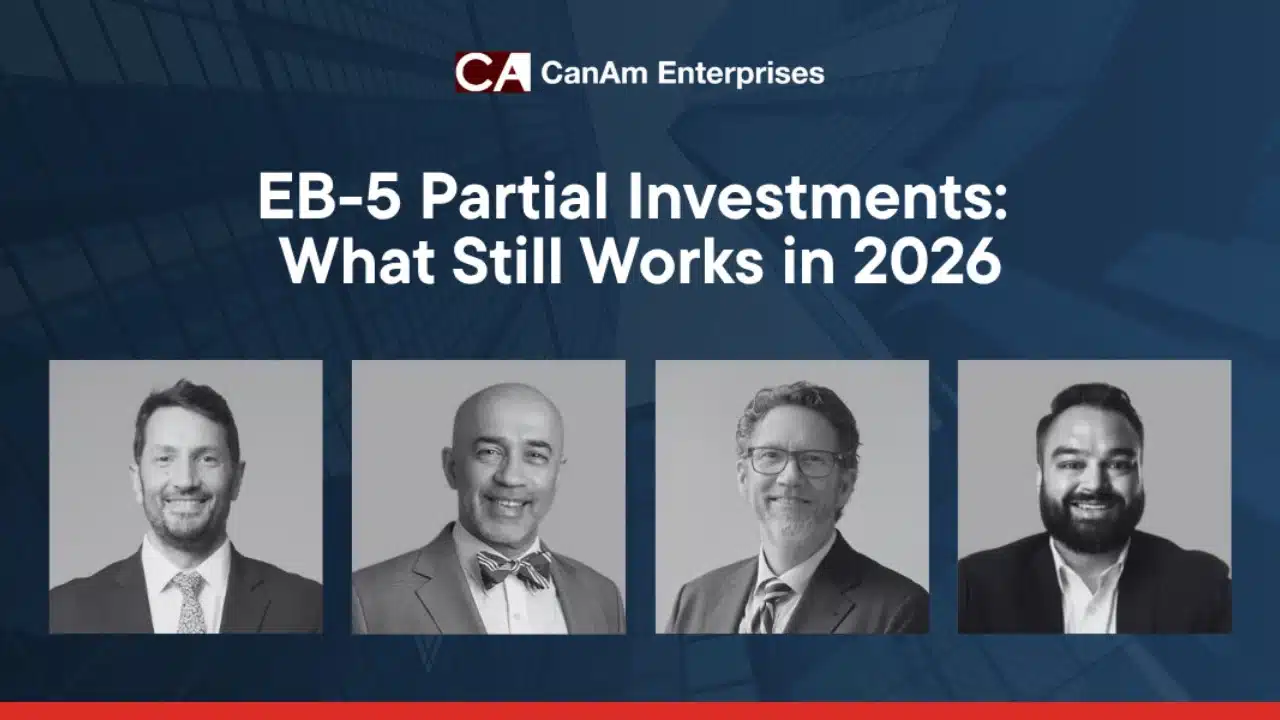
For Indian nationals considering EB-5, retrogression is the part of the process that generates the most anxiety and the most guesswork. On a recent CanAm panel on the Indian EB-5 market, three immigration attorneys addressed it directly. Their shared view was that retrogression in the set-aside categories is coming, that much of its timeline cannot be predicted, and that a period of waiting does not undermine the case for EB-5.
Retrogression is expected, and it closes the concurrent filing window
Nicolai Hinrichsen of Miller Mayer described retrogression as close to inevitable in the rural, high-unemployment, and likely infrastructure set-aside categories. Niral Patel of KLDP LLP explained the reasoning in plain terms: the US immigration system runs on supply and demand, and when demand exceeds the available visas, a backlog forms. With thousands of petitions already filed, more than 8,000 in high-unemployment and rural projects by one count cited on the panel, a final action date for Indian nationals is a matter of when. That timing carries a direct consequence. While filing dates are current, investors in the United States can file their petition and adjustment of status together and receive work and travel authorization. Once a final action date arrives for Indian nationals, that concurrent filing window closes.
What cannot be predicted
Rohit Turkhud of CSG Law cautioned against precise forecasting. Roughly 10,000 EB-5 visas are available worldwide each year, no single country may use more than 7.1 percent, and specialists have tried for years to predict when numbers become available without much success. Patel added that when retrogression is announced, no one immediately knows which category will retrogress first or for how long. He advised against the common assumption that a backlog automatically means a five-year wait, noting that a reliable read requires roughly eight to twelve months of data on how priority dates move month to month.
Filing dates and final action dates are not the same
Turkhud also drew a distinction that investors often miss. A filing date and a final action date are different, and the filing date can work to an investor’s advantage. The current availability in the set-aside categories reflects a lack of adjudication rather than a lack of interest, a point Peter Calabrese of CanAm Investor Services returned to during the discussion.
A possible silver lining in the unreserved category
The panel also noted a hopeful sign. India’s unreserved category has moved, and last year’s unreserved visas were fully used. Calabrese read that as evidence that the pre-RIA backlog is progressing, which could eventually ease the flow of visas into the set-aside categories. The attorneys added that one question remains open: when an investor is eligible for both an unreserved number and a set-aside number at adjustment, it is not yet clear how USCIS expects that choice to be made, and they would welcome guidance.
How the panel frames the wait
Hinrichsen placed retrogression in the context of the long term. Even with a wait, an EB-5 investor is likely to reach a green card sooner than someone in an EB-2 or EB-3 backlog, and the path is predictable in the sense that an approvable petition leads to a green card. Patel made the same point from the investor’s side: for someone already in an EB-2 or EB-3 backlog, even a retrogressed EB-5 tends to be the faster route.
The bottom line
Retrogression is part of the EB-5 picture for Indian nationals, and the panel treated it as something to plan around with measured expectations rather than react to. The timeline remains uncertain, which is a reason to keep expectations steady in both directions. A well-prepared petition filed while dates are current preserves the widest set of options.
Watch the discussion
The full panel discussion on the Indian EB-5 market is available on demand.
About CanAm Enterprises
CanAm Enterprises has more than 30 years of experience in investment-linked immigration, including over 20 years in the EB-5 program. CanAm has raised more than $4.1 billion for EB-5 projects and repaid more than $2.5 billion to investors across 75-plus projects and 11 regional centers spanning 30-plus states.
Contact: (212) 668-0690 / info@canamenterprises.com / www.canamenterprises.com