A Year of Leadership, Milestones, and Measurable Impact in EB-5 In a year defined by heightened scrutiny, evolving visa dynamics, and growing global demand for...
Part 3 of CanAm’s Series on EB-5 Adjudication Trends with Jen Hermansky and Pete Calabrese “Can I use a loan to fund my EB-5 investment?”...
The EB-5 landscape continues to evolve—quickly and, in many cases, unpredictably. In a recent webinar, Pete Calabrese, CEO of CanAm Investor Services, sat down with...
CanAm Enterprises is proud to announce a landmark achievement in our more than three decades of sponsoring immigration-linked investments: over 3,000 investor-families have now obtained...
Marketing U.S. private securities offerings—particularly those under the EB-5 Immigrant Investor Program—requires careful navigation of complex legal, regulatory, and practical considerations. While EB-5 marketing historically...
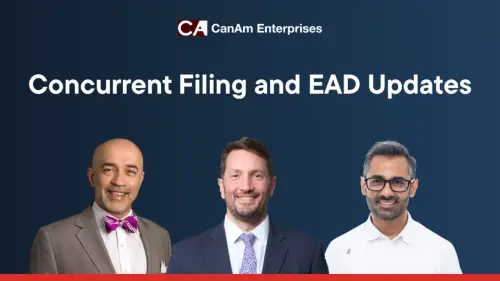
Concurrent Filing as a Case Study in Risk and Regulation The EB-5 Immigrant Investor Program (EB-5 Program) sits at a unique intersection of U.S. immigration...

The EB-5 Visa process can be complex, but understanding each step can simplify your journey toward U.S. permanent residency. From choosing the right investment project to filing the necessary paperwork, this guide provides a clear roadmap for potential investors.
Beginning with selecting a qualified Regional Center, investors must navigate through various stages including project evaluation, investment commitment, and filing Form I-526. Each phase is crucial and requires thorough research to ensure compliance and maximize the chances of a successful application.
Many potential investors harbor misconceptions about the EB-5 Program that can lead to confusion or missed opportunities. Addressing these myths is essential for making informed investment decisions.
For instance, one common myth is that the EB-5 investment must be made in a specific type of project. In reality, while many investors choose real estate developments, the investment can be made in various sectors, including infrastructure and job creation ventures, broadening the scope for potential returns.
Regional Centers play a pivotal role in the EB-5 investment landscape, providing a structured environment for investors to pool their resources and invest in job-creating projects. Understanding their function is vital for any prospective EB-5 investor.
These centers are designated by USCIS and often focus on specific industries or geographic areas. By investing through a Regional Center, investors can benefit from a more hands-off approach, as these entities handle the project management and compliance requirements, allowing investors to focus on their immigration goals.
Choosing the right EB-5 project is critical for both immigration success and financial return. Investors should consider several factors to ensure their investment aligns with their goals.
Key considerations include the project's job creation potential, the experience and track record of the management team, and the financial structure of the investment. Conducting thorough due diligence can help mitigate risks and enhance the likelihood of a successful EB-5 application.
The EB-5 Visa process can be complex, but understanding each step can simplify your journey toward U.S. permanent residency. From choosing the right investment project to filing the necessary paperwork, this guide provides a clear roadmap for potential investors.
Beginning with selecting a qualified Regional Center, investors must navigate through various stages including project evaluation, investment commitment, and filing Form I-526. Each phase is crucial and requires thorough research to ensure compliance and maximize the chances of a successful application.
Many potential investors harbor misconceptions about the EB-5 Program that can lead to confusion or missed opportunities. Addressing these myths is essential for making informed investment decisions.
For instance, one common myth is that the EB-5 investment must be made in a specific type of project. In reality, while many investors choose real estate developments, the investment can be made in various sectors, including infrastructure and job creation ventures, broadening the scope for potential returns.
Regional Centers play a pivotal role in the EB-5 investment landscape, providing a structured environment for investors to pool their resources and invest in job-creating projects. Understanding their function is vital for any prospective EB-5 investor.
These centers are designated by USCIS and often focus on specific industries or geographic areas. By investing through a Regional Center, investors can benefit from a more hands-off approach, as these entities handle the project management and compliance requirements, allowing investors to focus on their immigration goals.
Choosing the right EB-5 project is critical for both immigration success and financial return. Investors should consider several factors to ensure their investment aligns with their goals.
Key considerations include the project's job creation potential, the experience and track record of the management team, and the financial structure of the investment. Conducting thorough due diligence can help mitigate risks and enhance the likelihood of a successful EB-5 application.