Con đường đến Hoa Kỳ của bạn Cơ hội định cư bắt đầu từ đây
Tại CanAm, thành công của bạn là ưu tiên hàng đầu của chúng tôi. Chúng tôi hiểu rằng định cư tại Hoa Kỳ là một quyết định thay đổi cuộc đời, và chúng tôi luôn sẵn sàng là đối tác đáng tin cậy của bạn trên mọi bước đường. Từ buổi tư vấn ban đầu đến việc tìm hiểu các khoản đầu tư và vượt qua những khó khăn của quy trình định cư, chúng tôi luôn đồng hành cùng bạn với dịch vụ tận tâm và hỗ trợ tận tình.
Chúng tôi hiểu rằng khoản đầu tư của bạn chính là bảo đảm tương lai cho gia đình bạn. Đó là lý do tại sao chúng tôi áp dụng phương pháp tiếp cận thận trọng trong quy trình EB-5. Với hơn 38 năm kinh nghiệm, đội ngũ của chúng tôi tỉ mỉ lựa chọn các dự án mà chúng tôi tin rằng sẽ bảo toàn vốn đầu tư của bạn và giúp bạn đạt được mục tiêu định cư. Mỗi dự án được lựa chọn như thể đó là dành cho chính gia đình bạn.
So sánh hồ sơ hoàn trả vốn của CanAm với bất kỳ trung tâm khu vực nào khác và xem lý do tại sao hàng nghìn gia đình nhà đầu tư nhập cư đã tin tưởng giao phó hành trình EB-5 của họ cho chúng tôi.
Hành trình đến với quyền cư trú tại Hoa Kỳ của bạn bắt đầu từ đây.
Tại CanAm, thành công của bạn là ưu tiên hàng đầu của chúng tôi. Chúng tôi hiểu rằng việc nhập cư vào Hoa Kỳ là một quyết định thay đổi cuộc đời, và chúng tôi luôn sẵn sàng trở thành đối tác đáng tin cậy của bạn trên mọi chặng đường. Từ buổi tư vấn ban đầu đến việc hiểu rõ các khoản đầu tư của bạn và vượt qua những phức tạp của quy trình nhập cư, chúng tôi luôn sát cánh bên bạn với dịch vụ lấy khách hàng làm trung tâm và sự hỗ trợ tận tâm.
Chúng tôi hiểu rằng khoản đầu tư của bạn là để đảm bảo tương lai cho gia đình. Đó là lý do tại sao chúng tôi áp dụng cách tiếp cận thận trọng đối với quy trình EB-5. Với hơn 39 năm kinh nghiệm, đội ngũ của chúng tôi lựa chọn kỹ lưỡng các dự án mà chúng tôi tin rằng sẽ bảo toàn vốn đầu tư của bạn và giúp bạn đạt được mục tiêu nhập cư. Mỗi dự án được lựa chọn như thể đó là dự án dành cho chính gia đình chúng tôi.
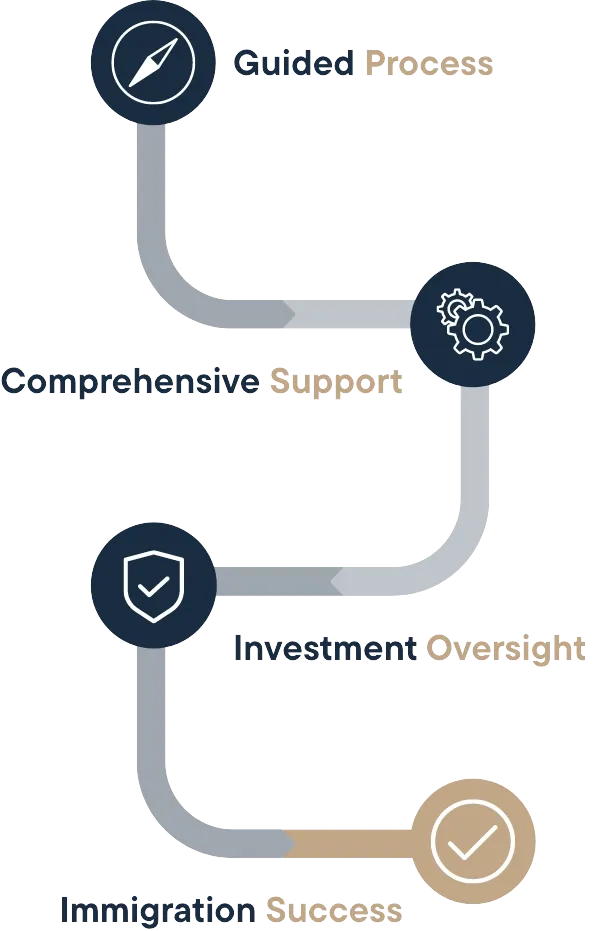
Hành trình EB-5 của bạn: Con đường đơn giản dẫn đến thành công
Đội ngũ giàu kinh nghiệm của chúng tôi sẽ hướng dẫn bạn trong suốt hành trình EB-5 của bạn với các bước rõ ràng và dễ quản lý:
BƯỚC 1
Kết nối với chúng tôi
Bắt đầu hành trình Thẻ xanh của bạn bằng cách kết nối với đội ngũ chuyên gia của chúng tôi.
Bước 2
Xem xét và gửi
Tự tin xem xét các tài liệu chào hàng cần thiết và nộp đơn I-526E với sự hướng dẫn tận tình của chúng tôi.
BƯỚC 3
Chuẩn bị cho cuộc phỏng vấn
Chuẩn bị kỹ lưỡng cho buổi phỏng vấn tại Lãnh sự quán với sự hỗ trợ chuyên nghiệp và tận tình từ CanAm.
BƯỚC 4
Nộp đơn I-829
Thành công đạt được quyền thường trú tại Hoa Kỳ bằng cách nộp đơn I-829 với sự hỗ trợ liên tục của chúng tôi
Những gì chúng tôi cung cấp: Chất lượng và Cơ hội
CanAm cung cấp các dự án đầu tư chất lượng cao, đáp ứng mọi yêu cầu của USCIS đối với Chương trình Thị thực EB-5.
Chúng tôi kết nối nhà đầu tư nước ngoài đủ điều kiện và nhà phát triển dự án uy tín. Điều này cho phép bạn có được quyền thường trú nhân Hoa Kỳ, đồng thời đóng góp cho nền kinh tế Hoa Kỳ thông qua việc tạo việc làm và tăng trưởng kinh tế.
Chương trình thị thực EB-5:
Đầu tư của bạn. Tương lai của bạn.
Chương trình EB-5 cung cấp cho các nhà đầu tư nước ngoài đủ điều kiện cơ hội nhận được quyền thường trú (thẻ “xanh”) bằng cách đầu tư 800.000 đô la vào các dự án nằm trong Khu vực việc làm mục tiêu (TEA) tạo ra ít nhất mười công việc toàn thời gian cố định cho người lao động Hoa Kỳ.
Khám phá những lợi ích ngay hôm nay! Bạn có thể đủ điều kiện nhận:
Giấy ủy quyền làm việc
Làm việc tại Hoa Kỳ cho bất kỳ nhà tuyển dụng nào không cần bảo lãnh với Giấy phép lao động (EAD).
Giấy phép du lịch
Du lịch tự do trong và ngoài Hoa Kỳ với Giấy phép du lịch.
LỜI CHỨNG THỰC
Lắng nghe từ khách hàng của CanAm
“Đội ngũ CanAm đã làm việc rất chăm chỉ để đảm bảo hồ sơ của chúng tôi được chuẩn bị kỹ lưỡng. Chúng tôi thường xuyên nhận được báo cáo về tình trạng đầu tư.”
NHÀ ĐẦU TƯTemple University Project
“Đội ngũ của CanAm luôn phản hồi nhanh chóng và chủ động cập nhật thông tin bất cứ khi nào được yêu cầu.”
NHÀ ĐẦU TƯ, ÔNG MMiamiCentral Project
“Nhờ có tất cả mọi người tại CanAm, tôi thực sự đang sống trong giấc mơ của mình và tôi không còn lời nào để diễn tả lòng biết ơn của mình nữa.”
NHÀ ĐẦU TƯ, ÔNG CAll Aboard Florida Project
"CanAm đã đưa ra một ví dụ đáng kinh ngạc khi hoàn trả số tiền trong tình hình đại dịch hỗn loạn và tuyệt vọng này, khi toàn bộ ngành công nghiệp đang phải chịu thiệt hại nặng nề."
NHÀ ĐẦU TƯ, BÀ CHAll Aboard Florida Project
"Trong bối cảnh nền kinh tế biến động và những thay đổi nhanh chóng trong việc diễn giải luật EB5, CanAm đã chứng tỏ mình là công ty EB-5 tốt nhất. Tôi luôn được cập nhật liên tục về tiến độ EB-5/thẻ xanh của mình, và tôi chưa bao giờ lo lắng về tính bảo mật hay lợi nhuận của khoản đầu tư."
Nhà đầu tư, MR. BPA Conventional Center
"Tôi muốn cảm ơn CanAm vì công việc tuyệt vời, năng lực đáng tin cậy và sự hỗ trợ lâu dài của các bạn dành cho các đối tác. Được làm việc với các bạn là một trải nghiệm tuyệt vời."
Nhà đầu tư, ÔNG YPCC Project
Tham gia bản tin của chúng tôi+-
Đăng ký để nhận email về tin tức mới nhất về CanAm và Chương trình thị thực EB-5.
CanAm Enterprises: 20 Years in EB-5
CanAm recently celebrated our 20th Anniversary in EB-5. Watch our video commemorating the many milestones that got us here.