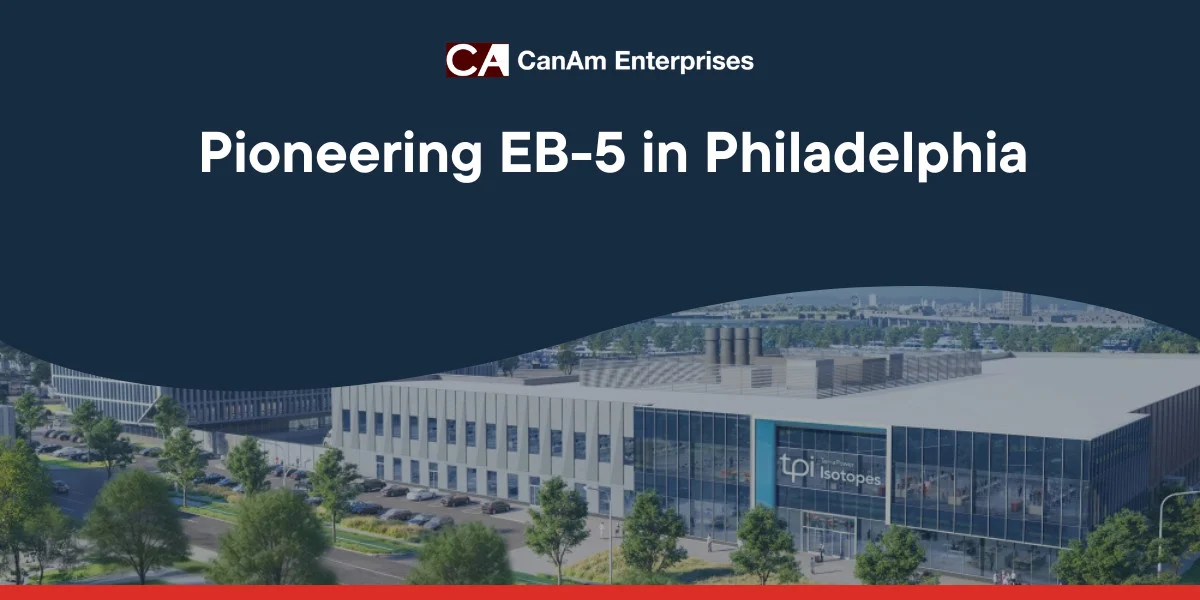
Introduction: A New Era for EB-5 Under the RIA In the years since the Reform and Integrity Act of 2022 (RIA) reshaped the EB-5 landscape,...
Compliance and Best Practices in EB-5 – Part 2 In the world of EB-5 investing, good compliance is good business — and it begins with...
This article is the third in our five-part series breaking down CanAm’s recent webinar, Navigating EB-5 Visa Backlogs in 2025. In Part 1, we explored...
As Suzanne Lazicki’s analysis demonstrates, the RIA has revived EB-5 demand—but at a level far beyond what annual visa limits can sustain. Severe backlogs and...
A key aspect of evaluating an EB-5 investment is understanding the capital stack—the structure of financing that funds the project. The position of EB-5 capital...
Visa Limits Constrain the Use of EB-5 The potential for EB-5 to drive investment and job creation depends on visas. EB-5 has an annual quota...

The EB-5 Visa Program offers a unique pathway for foreign investors to obtain U.S. residency by investing in American businesses. This program not only provides investors with a chance to secure a green card but also opens doors to numerous opportunities, such as living and working in the United States.
Investors can benefit from the program's flexibility, as it allows for investment in various sectors, including real estate, hospitality, and infrastructure. Additionally, the program contributes to job creation in the U.S., making it an attractive option for both investors and the economy.
Recent updates to the EB-5 Visa Program regulations have introduced significant changes that affect both investors and regional centers. Understanding these changes is crucial for potential applicants to navigate the evolving landscape of U.S. immigration policy.
For instance, the EB-5 Reform and Integrity Act of 2022 has implemented new requirements for investment amounts and project eligibility. Staying informed about these changes can help investors make better decisions and enhance their chances of a successful application.
Selecting the right investment project is a critical step for EB-5 investors. Factors such as project viability, location, and the track record of the regional center play a crucial role in ensuring a successful investment outcome.
Investors should conduct thorough due diligence, including reviewing project feasibility studies and understanding the economic conditions of the area. Engaging with experienced advisors can further enhance the decision-making process and mitigate risks associated with EB-5 investments.
Highlighting success stories of individuals who have successfully navigated the EB-5 Visa process can provide inspiration and insight for potential investors. These narratives often illustrate the diverse backgrounds and motivations of EB-5 investors seeking a new life in the United States.
Many success stories showcase how investors have leveraged their residency to establish thriving businesses, contribute to their communities, and provide opportunities for their families. These examples serve as a testament to the program's potential and the positive impact it can have on both investors and the U.S. economy.
The EB-5 Visa Program offers a unique pathway for foreign investors to obtain U.S. residency by investing in American businesses. This program not only provides investors with a chance to secure a green card but also opens doors to numerous opportunities, such as living and working in the United States.
Investors can benefit from the program's flexibility, as it allows for investment in various sectors, including real estate, hospitality, and infrastructure. Additionally, the program contributes to job creation in the U.S., making it an attractive option for both investors and the economy.
Recent updates to the EB-5 Visa Program regulations have introduced significant changes that affect both investors and regional centers. Understanding these changes is crucial for potential applicants to navigate the evolving landscape of U.S. immigration policy.
For instance, the EB-5 Reform and Integrity Act of 2022 has implemented new requirements for investment amounts and project eligibility. Staying informed about these changes can help investors make better decisions and enhance their chances of a successful application.
Selecting the right investment project is a critical step for EB-5 investors. Factors such as project viability, location, and the track record of the regional center play a crucial role in ensuring a successful investment outcome.
Investors should conduct thorough due diligence, including reviewing project feasibility studies and understanding the economic conditions of the area. Engaging with experienced advisors can further enhance the decision-making process and mitigate risks associated with EB-5 investments.
Highlighting success stories of individuals who have successfully navigated the EB-5 Visa process can provide inspiration and insight for potential investors. These narratives often illustrate the diverse backgrounds and motivations of EB-5 investors seeking a new life in the United States.
Many success stories showcase how investors have leveraged their residency to establish thriving businesses, contribute to their communities, and provide opportunities for their families. These examples serve as a testament to the program's potential and the positive impact it can have on both investors and the U.S. economy.