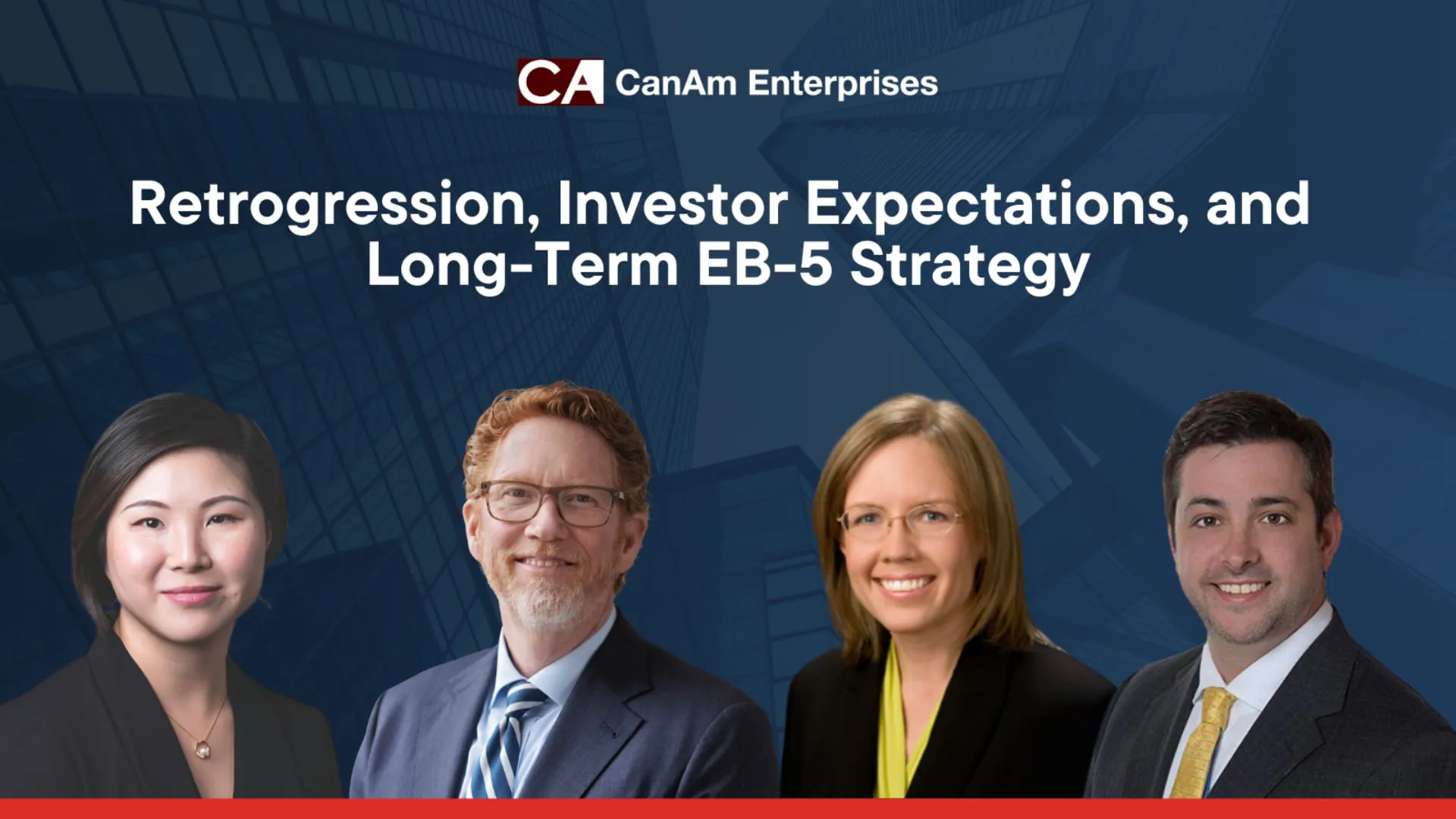
This article is the fifth and final installment in our series breaking down CanAm’s recent webinar, Navigating EB-5 Visa Backlogs in 2025.
Earlier in the series, we covered:
- Part 1: Surging EB-5 demand and the inevitability of backlogs.
- Part 2: How visa allocation works, and why nationality matters.
- Part 3: The benefits of concurrent filing and the 2026 grandfathering deadline.
- Part 4: How to choose between rural and high-unemployment projects.
Now in Part 5, we look at how retrogression impacts investors, why it often motivates action, and why transparency is the key to managing expectations in EB-5 planning.
Retrogression: A Risk and a Motivator
Retrogression occurs when the demand for EB-5 visas exceeds supply, forcing the Department of State to impose cutoff dates in the Visa Bulletin. For families, this can mean waiting years before their green cards are issued—even after investing and filing.
While retrogression is often seen as a deterrent, our panel explained it can also motivate investors to act sooner. As Miller Mayer Partner Nicolai Hinrichsen shared:
“I’ve never had a client tell me they wish they would have waited longer to file EB-5. Time matters. I’ve seen many kids age out by a day.”
This urgency is especially true for families with children nearing the age-out threshold or for professionals seeking a reliable alternative to H-1B sponsorship.
Resetting Investor Expectations
One of the most important themes of the discussion was aligning investor expectations with reality.
EB-5 Analyst Suzanne Lazicki emphasized:
“If people invest thinking they’ll get a green card in three years and then it’s actually eight, that can be a personal disaster. We want investors to make informed decisions.”
Unrealistic timelines can lead to frustration and poor decision-making. Transparency helps ensure families understand both the benefits and the risks of EB-5 participation.
Why Transparency Matters
WR Immigration Partner Joey Barnett reminded investors that online anecdotes of “8-month green cards” don’t reflect today’s reality:
“That is not reality for someone filing today. The people who are getting their green cards now filed years ago, when the categories were current.”
The truth is that EB-5 is a long-term process. Families should plan for multiple years of waiting, supported by interim benefits like work and travel authorization through concurrent filing.
EB-5 as a Long-Term Strategy
Despite challenges, the experts agreed EB-5 remains one of the most reliable immigration pathways. For investors willing to take a long-term view, the program provides a clear route to U.S. residency—while also offering unique short-term advantages for those already in the U.S.
“The key is mitigating risks, understanding the timeline, and making sure you’re supported by experienced counsel and a strong regional center partner.” – Panel Summary
Key Takeaways from Part 5
- Retrogression is inevitable for China and India, but it often motivates investors to act sooner.
- Transparency is essential—setting realistic expectations avoids disappointment.
- Online anecdotes can be misleading; today’s timelines differ from those of past investors.
- EB-5 remains a viable long-term immigration strategy, particularly when families act strategically and file before the 2026 deadline.
Download the Full White Paper
For a deeper dive into visa availability, backlog projections, and strategic investor considerations, CanAm commissioned EB-5 analyst Suzanne Lazicki to author a comprehensive white paper:
Publication | 2025 | EN | EB-5 Visa Availability and Allocation
This resource expands on the data and themes discussed in the webinar and provides critical context for families evaluating the EB-5 program today.
Conclusion: A Strategic Future
The EB-5 program in 2025 is defined by opportunity and challenge in equal measure. For families willing to plan ahead, manage expectations, and act before the 2026 grandfathering deadline, EB-5 remains one of the strongest immigration tools available.