Seu caminho para a residência nos EUA começa aqui.
Na CanAm, o seu sucesso é a nossa prioridade. Entendemos que imigrar para os EUA é uma decisão que muda a vida, e estamos aqui para ser seu parceiro de confiança em cada etapa do processo. Desde a consulta inicial até a compreensão dos seus investimentos e a compreensão das complexidades do processo de imigração, estamos ao seu lado com um serviço focado no cliente e apoio inabalável.
Na CanAm, o seu sucesso é a nossa prioridade. Entendemos que imigrar para os EUA é uma decisão que muda a vida, e estamos aqui para ser seu parceiro de confiança em cada etapa do processo. Desde a consulta inicial até a compreensão dos seus investimentos e a compreensão das complexidades do processo de imigração, estamos ao seu lado com um serviço focado no cliente e apoio inabalável.
Compara o registo de reembolso de capital da CanAm com qualquer outro centro regional e vê porque é que milhares de famílias de investidores imigrantes confiaram as suas viagens EB-5 a nós.
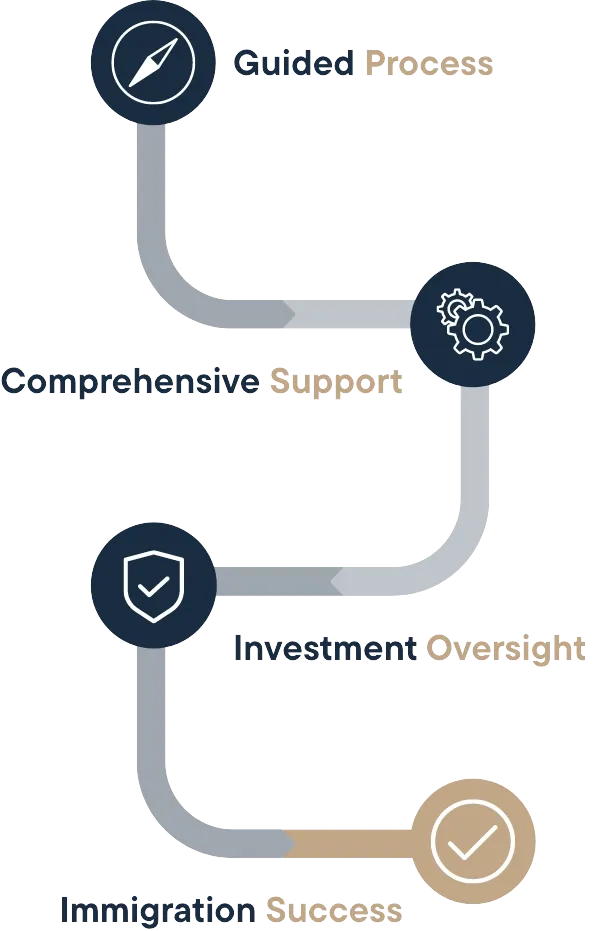
Sua jornada EB-5: um caminho simples para o sucesso
Nossa equipe experiente guiará você por toda a sua jornada EB-5 com etapas claras e gerenciáveis:
PASSO 1
Conecte-se conosco
Comece sua jornada para o Green Card entrando em contato com nossa equipe de especialistas.
PASSO 2
Revise e envie
Revise com confiança os documentos essenciais da oferta e envie sua petição I-526E com nossa orientação dedicada.
PASSO 3
Prepare-se para a entrevista
Prepare-se cuidadosamente para sua entrevista no consulado com assistência profissional e personalizada da CanAm.
PASSO 4
Enviar petição I-829
Obtenha residência permanente nos EUA enviando sua petição I-829 com nosso suporte contínuo
O que oferecemos: Qualidade e oportunidade
A CanAm oferece projetos de investimento de alta qualidade que atendem a todos os requisitos do USCIS para o Programa de Visto EB-5.
Fazemos a ponte entre investidores estrangeiros qualificados e desenvolvedores de projetos renomados. Isso permite que você obtenha residência permanente nos EUA e, ao mesmo tempo, contribua para a economia americana por meio da criação de empregos e do crescimento econômico.
Programa de Visto EB-5:
Seu Investimento. Seu Futuro.
O Programa EB-5 oferece a investidores estrangeiros qualificados a oportunidade de obter residência permanente (um “green card”) em troca de investir US$ 800.000 em projetos localizados em Áreas de Emprego Alvo (TEAs) que criam pelo menos dez empregos permanentes em tempo integral para trabalhadores dos EUA.
Descubra os benefícios hoje mesmo! Você pode ter direito a:
Documento de Autorização de Emprego
Trabalhe nos EUA para qualquer empregador sem patrocínio com um Documento de Autorização de Emprego (EAD).
Autorização de viagem
Viaje dentro e fora dos EUA livremente com uma Permissão de Viagem.
DEPOIMENTOS
Ouça os clientes da CanAm
"A equipe da CanAm trabalhou arduamente para garantir que nossa inscrição fosse minuciosa. Recebemos relatórios regulares sobre o status do nosso investimento."
INVESTIDORTemple University Project
“A equipe da CanAm sempre foi receptiva e proativamente manteve as coisas atualizadas sempre que solicitado.”
INVESTIDOR, SR. MMiamicentral Project
“Graças a todos vocês da CanAm, estou realmente vivendo meu sonho e não tenho mais palavras para expressar minha gratidão. “
INVESTIDOR, SR. CAll Aboard Florida Project
"A CanAm deu um exemplo surpreendente ao devolver o valor nesta situação de pandemia desesperadora e caótica, em que toda a indústria está sofrendo dramaticamente."
INVESTIDORA, SRA. CHAll Aboard Florida Project
"Em meio a uma economia turbulenta e algumas mudanças rápidas na interpretação da legislação EB-5, a CanAm provou ser a melhor empresa EB-5. Fui mantido constantemente atualizado sobre o andamento do meu EB-5/green card e nunca me preocupei com a segurança ou o retorno do meu investimento."
INVESTIDOR, SR. BPA Conventional Center
"Gostaria de agradecer à CanAm pelo excelente trabalho, pela competência e confiabilidade, além do suporte duradouro aos parceiros. Foi uma ótima experiência trabalhar com vocês."
INVESTIDOR, SR. YPCC Project
CanAm Enterprises: 20 Years in EB-5
CanAm recently celebrated our 20th Anniversary in EB-5. Watch our video commemorating the many milestones that got us here.