While policy reform and market dynamics continue to shape EB-5’s future, another powerful force is at play: the courts.
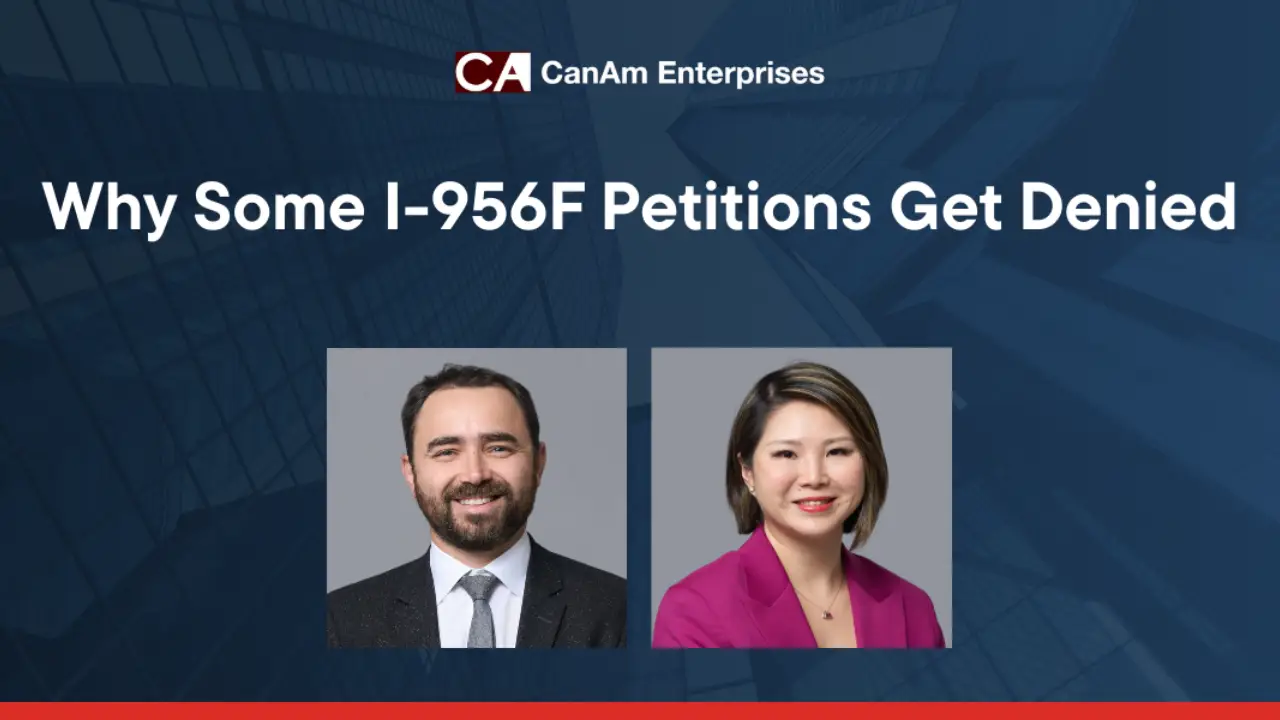
In CanAm’s recent EB-5 Advocacy Webinar, CEO Tom Rosenfeld joined leading immigration attorneys Ron Klasko, Ira Kurzban, and Enrique González to examine the growing number of EB-5-related lawsuits and the broader regulatory challenges facing the industry. Their discussion revealed both encouraging progress and persistent friction between the EB-5 community and its regulators.
The takeaway? Litigation isn’t just a symptom of tension — it’s become a tool for accountability and reform.
When USCIS Moves the Goalposts
One of the most significant developments in recent months has been USCIS’s inconsistent adjudications — particularly between the I-526E (initial petition) and I-829 (petition to remove conditions) stages.
As Ron Klasko explained:
“We’re seeing the agency approve source-of-funds documentation at the I-526 stage and then deny it at the I-829 stage, saying, basically, ‘We changed our mind.’ That’s outrageous — both legally and morally.”
This inconsistency, he noted, undermines investor confidence and creates unnecessary litigation. Federal courts have already pushed back, with several successful rulings affirming that USCIS has overstepped in redefining “lawful source of funds.”
“At some point,” Klasko said, “we hope these decisions send a message that the agency can’t keep moving the goalposts.”
Investor Loans and “Good Faith” Questions
Another emerging issue involves investor loan programs, in which a lender — often a non-bank financial entity — provides partial financing to qualified EB-5 investors. Historically, these arrangements were considered compliant. But after the RIA added new language requiring loans to be made in ‘good faith’ and not in ‘circumvention’ of program requirements, USCIS has begun questioning their legality.
Klasko summarized the problem bluntly:
“The RIA’s new terms can’t be meaningless, but they also can’t be used to rewrite the rules. Properly structured investor loans are lawful — and denying them after years of approval is simply wrong.”
The issue, panelists agreed, will likely be settled through continued litigation, much like the earlier “source of funds” disputes.
National Security and the Politics of Perception
Ira Kurzban and Enrique González expanded the conversation to include new scrutiny of EB-5 investors from China and other high-volume markets, where USCIS has started probing connections to state-owned entities and even party membership.
Kurzban warned that this trend risks turning legitimate investors into political targets:
“Working for a major Chinese company doesn’t make you a security risk. These broad denials have nothing to do with the intent of EB-5 — they’re policy drift disguised as national security.”
González agreed, framing the issue within the larger political climate:
“Layer the national security narrative onto the program, and it becomes an easy excuse to restrict it. That’s why the industry needs to decide what it stands for — because these are the issues that could define EB-5’s future beyond 2027.”
Both lawyers emphasized that advocacy and transparency — not silence — will be key to maintaining the Program’s credibility.
An Industry That’s Grown Up
Despite these challenges, González offered a hopeful perspective:
“This industry has matured. Twenty years ago, EB-5 was the wild west. Today, it’s a structured, compliant ecosystem led by reputable regional centers like CanAm.”
He pointed to the growth of trade associations and investor-led organizations such as IIUSA and AIIA, which are now coordinating advocacy efforts and giving investors a stronger voice.
That maturity, González argued, is the foundation for EB-5’s long-term resilience — but it must be paired with continued reform and vigilance. “We have the demand,” he said. “Now we have to make sure the system keeps up with it.”
Tom Rosenfeld: Integrity Is the Best Advocacy
For Rosenfeld, the litigation wave only reinforces CanAm’s core philosophy: do the right thing first, and advocate from a position of integrity.
“The courts can correct what’s unfair,” he said, “but our job is to stay transparent, conservative, and investor-focused. That’s what gives us credibility when we engage with policymakers and regulators.”
Rosenfeld emphasized that these legal battles — while frustrating — also highlight the strength of the EB-5 ecosystem. “The fact that investors and industry leaders are fighting back shows that EB-5 has matured. We’re not just participants; we’re advocates for how the Program should work.”
Key Takeaways for Investors and Stakeholders
- Litigation is reshaping EB-5. Recent court rulings have successfully challenged USCIS’s overreach on source-of-funds and loan interpretations.
- Consistency matters. The gap between I-526E and I-829 adjudications must be addressed to restore fairness and predictability.
- National security scrutiny is rising. Investors from certain countries face heightened review; transparency and compliance are critical.
- The industry has evolved. Stronger governance, data, and advocacy make EB-5 more credible than ever.
- Integrity drives influence. The most effective advocacy comes from doing the right thing for investors — every time.